
New European Travel Rules 2026: US & UK Guide
International travel across Europe has entered a new regulatory era. Following structured technical rollouts across the European Union, the Schengen Area, and the United Kingdom, border control infrastructure has transitioned from manual passport ink-stamping to automated biometric verification and digital travel authorisations.
For travelers planning trips in 2026, impromptu departures without prior electronic verification are largely a thing of the past. Cross-border movements now require advance electronic clearances, registration at port-of-entry kiosks, and careful passport validity audits. Even within the Schengen Zone, temporary internal border controls remain active along several key overland routes.
These adjustments directly affect American vacationers, British citizens navigating post-Brexit regulations, and European residents traveling across the English Channel or commuting across internal borders. This guide provides an authoritative breakdown of confirmed rules, fees, timelines, and country-specific requirements for 2026.
Quick Takeaways: Key Rules for 2026
- EU Entry/Exit System (EES) is Live: The automated border system operates across 29 Schengen countries, registering fingerprints and facial scans for non-EU nationals at external borders.
- ETIAS Introduction Slated for Late 2026: The European Travel Information and Authorisation System (ETIAS) requires pre-travel clearance for visa-exempt travelers (including US and UK citizens) with a standardized fee of €20.
- UK ETA Fully Mandatory: All non-visa foreign travelers entering the UK—including US, Canadian, and EU citizens—must obtain a UK Electronic Travel Authorisation (ETA) (£20 fee, valid for 2 years).
- Strict UK Passport Checks: British passports must have been issued less than 10 years before the arrival date in the Schengen area and retain at least 3 months of validity beyond the departure date.
- Internal Schengen Spot Checks: Land-border verifications remain active across Germany, Austria, France, Italy, and the Netherlands. All travelers must carry official government identification.
- 100 ml Liquid Limits Maintained: European Union airports maintain the strict 100 ml container limit for cabin baggage pending updated technical standards for C3 scanners.
1. The EU Entry/Exit System (EES)
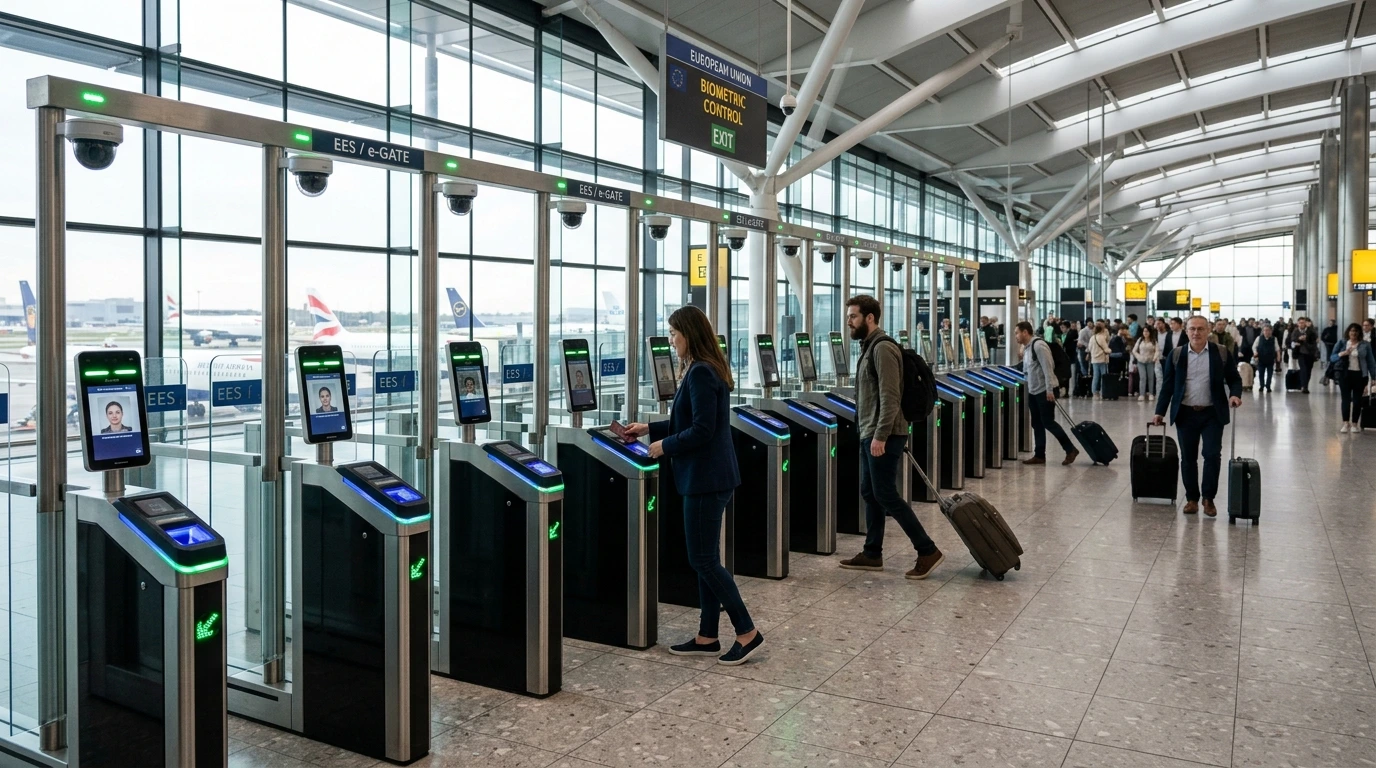
The EU Entry/Exit System (EES) replaces physical ink-stamping with a centralized digital database managed by the EU operational agency eu-LISA across 29 Schengen member states.
How EES Functions at the Border
- First-Time Registration: Non-EU nationals arriving at external Schengen borders (airports, maritime ports, and international rail hubs such as Eurostar terminals) must register at self-service kiosks. The kiosk captures four fingerprints and a facial scan to compare against the passport’s biometric chip.
- Subsequent Crossings: For the next three years, travelers verify their identity at automated e-Gates or staffed border booths using facial recognition without re-fingerprinting.
- Automated Overstay Calculation: The system automatically logs the exact dates of entry and exit under the 90/180-day short-stay rule, instantly alerting border officers to overstays.
2. The European Travel Information and Authorisation System (ETIAS)
Unlike the physical EES kiosks at the border, the European Travel Information and Authorisation System (ETIAS) is a digital pre-travel security clearance required before boarding.
- Rollout Schedule: Following technical integration with the EES, ETIAS is scheduled to begin operations in the last quarter of 2026, supported by a 6-month transitional grace period.
- Eligibility and Scope: Nationals from 59 visa-free countries—including the United States, United Kingdom, Canada, and Australia—must submit personal, travel, and security details online before visiting 30 European nations.
- Official Fee and Validity: The application fee is set at €20, officially adjusted from earlier proposals by the European Commission. An approved ETIAS is valid for 3 years (or until passport expiry) for multiple entries of up to 90 days within any 180-day window. Applicants under 18 or over 70 years old are exempt from the fee.
3. The United Kingdom Electronic Travel Authorisation (ETA)
Inbound travel to the United Kingdom now operates under the mandatory UK Electronic Travel Authorisation (ETA) scheme.
- Universal Enforcement: The requirement applies to all visa-exempt foreign visitors, including travelers from the US, Canada, Australia, Japan, and all EU/EEA/Swiss nations. Transportation operators strictly enforce ETA verification prior to boarding.
- Cost and Processing: An ETA costs £20 per applicant (including infants and children) and is typically processed within three business days via the official UK ETA mobile application or on GOV.UK.
- Validity: The authorization lasts for 2 years or until passport expiry, covering multiple visits of up to 6 months each for tourism, business visits, or short-term study.
- Airport Transit: Passengers changing planes at UK airports (such as London Heathrow or Manchester) must hold a valid ETA even if remaining airside without passing through border control.
4. Internal Schengen Border Verifications
Under the EU Schengen Borders Code, multiple member states have extended temporary domestic border checks to manage security and migration flows. Travelers on road, rail, and ferry routes across Germany, Austria, France, Italy, Poland, Denmark, and the Netherlands should expect occasional document inspections. Valid passports or national identity cards must be carried at all times; driving licenses do not serve as proof of identity at international crossings.
5. Airport Cabin Liquid Regulations
While several European hubs initially installed advanced computed tomography (C3) scanners to relax liquid limits, the European Commission reinstated a uniform 100 ml per container rule across all EU and Schengen airports. All liquids, gels, and pastes must be packed in containers of 100 ml or less and fit comfortably inside a single clear, resealable 1-liter plastic bag.
Country-by-Country Requirements for 2026
United States Travelers
- Visiting the EU/Schengen Area: US citizens remain visa-exempt for trips under 90 days. Entry requires completing biometric registration under the EES. Once operational in late 2026, an approved ETIAS will be mandatory prior to boarding.
- Visiting the United Kingdom: US citizens must hold an approved UK ETA (£20) before travel.
United Kingdom Travelers
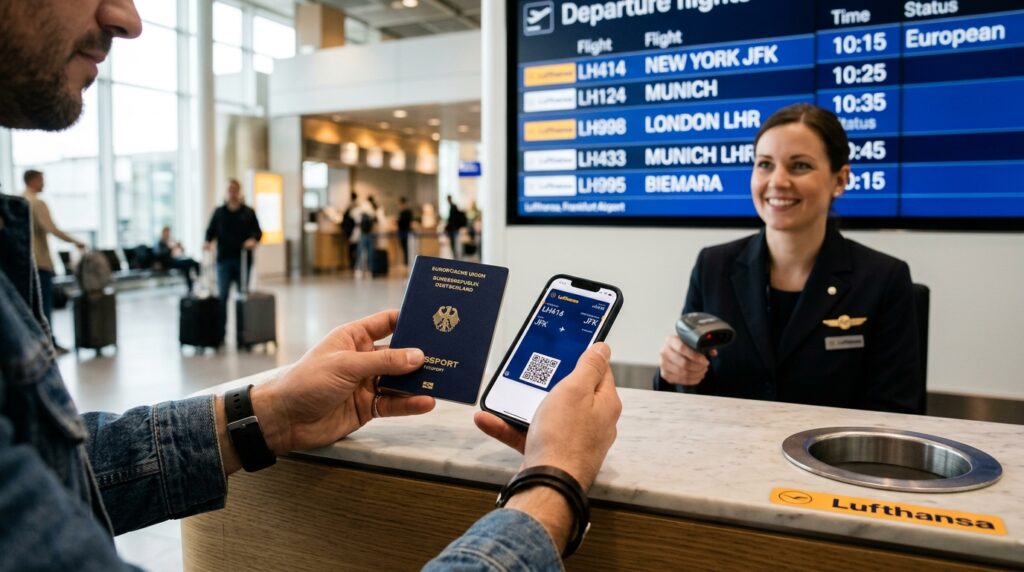
- Visiting the EU/Schengen Area: As third-country nationals, British travelers use non-EU lanes and must complete EES biometric capture. ETIAS will be mandatory once live.
- Passport Validity Rules: British passport holders must verify two criteria under EU Travel Rules:
- The passport must have been issued less than 10 years before the date of entry into the EU (extra months added on pre-October 2018 passports do not count).
- The passport must be valid for at least 3 months after the planned date of departure from the Schengen area.
EU, EEA, and Swiss Citizens
- Within the Schengen Zone: EU citizens are exempt from both EES and ETIAS. Due to internal checks, an official national identity card or passport must be carried on all inter-country travel.
- Visiting the United Kingdom: EU travelers can no longer enter the UK with national ID cards (unless holding settled/pre-settled status). A biometric passport and an approved UK ETA (£20) are mandatory.
Travel Requirement Summary Table
| Traveler Nationality | Destination | Primary Requirement | Official Cost | Validity |
|---|---|---|---|---|
| United States | EU / Schengen | Biometric Passport + EES (ETIAS late 2026) | EES: Free ETIAS: €20 | EES: 3 Years ETIAS: 3 Years |
| United States | United Kingdom | Biometric Passport + UK ETA | £20 | 2 Years (Multiple entries) |
| United Kingdom | EU / Schengen | Passport (10-yr rule) + EES (ETIAS late 2026) | EES: Free ETIAS: €20 | EES: 3 Years ETIAS: 3 Years |
| EU / EEA / Swiss | United Kingdom | Valid Passport + UK ETA | £20 | 2 Years (Multiple entries) |
| EU / EEA / Swiss | Schengen Member States | National Identity Card or Passport | Free | Document duration |
Official Fees vs. Municipal Access Taxes
- EU Entry/Exit System (EES): Free. Registration occurs at airport and seaport terminals at no cost.
- ETIAS (EU): €20 (approx. $22 USD / £17 GBP). Paid online. Free for applicants under 18 or over 70.
- UK ETA: £20 (approx. $26 USD / €24 EUR). Paid via the official mobile app or GOV.UK. Applies to all travelers regardless of age.
- Venice Day-Tripper Access Fee: The city of Venice collects its Venice Access Fee (Contributo di Accesso) on designated peak days between spring and July. The standard rate is €5 per person if reserved at least 4 days in advance, rising to €10 per person within 3 days. Overnight hotel guests are exempt but must register online for an exemption QR code.
Actionable Pre-Travel Checklist
- Audit UK Passport Issue Dates: Check the “Date of Issue” on your passport. Confirm it is under 10 years old on arrival in the EU and retains at least 3 months of validity beyond your exit date.
- Apply for UK ETA Early: Apply at least 3 business days prior to departure through the official “UK ETA” app on iOS or Android.
- Allow Extra Buffer Time at Borders: Budget an extra 45–60 minutes at major European arrival hubs (such as Paris CDG, Frankfurt, Amsterdam, Dover, and St Pancras) for initial EES kiosk processing.
- Avoid Third-Party Intermediaries: Apply for authorizations only through official government domains (
europa.euandgov.uk) to avoid predatory fees and identity theft. - Keep Passports Handy During Transit: Carry physical passports and official identification on train journeys, cross-border buses, and highway routes within the Schengen Area.
Frequently Asked Questions
Does an approved UK ETA or ETIAS guarantee entry?
No. An electronic authorization permits boarding by transport carriers. Final entry permission remains subject to assessment by immigration officers at the border.
Are passports still stamped in the Schengen Zone in 2026?
No. Under the Entry/Exit System, manual ink stamping has been replaced by digital biometric logs recording entry and exit times across 29 Schengen states.
Do children require their own UK ETA and ETIAS?
Yes. Every traveler, including infants, must have an approved authorization. The UK ETA charges the standard £20 fee for all applicants, whereas ETIAS waives the €20 fee for applicants under 18.
Can I transit through a UK airport without an ETA?
No. The UK government mandates an approved ETA for visa-exempt travelers connecting through UK airports, including airside transit passengers who do not pass through border security.
Has the 90/180-day Schengen stay limit changed?
No. The limitation remains 90 days in any 180-day window. The EES automates enforcement, flagging overstays instantly in the central system.
Sources & Official References
- European Commission (Migration and Home Affairs): Entry/Exit System (EES) Framework
- European Union Official Portal: ETIAS Official Information Portal
- European Commission Press Release: Adjustment of ETIAS Fee to EUR 20
- UK Visas and Immigration: Electronic Travel Authorisation (ETA) Guidance
- European Commission (Home Affairs): Temporary Reintroduction of Internal Border Controls
- City of Venice (Venezia Unica): Official Venice Access Fee Portal
- European Union (Your Europe): Travel Documents for Non-EU Nationals